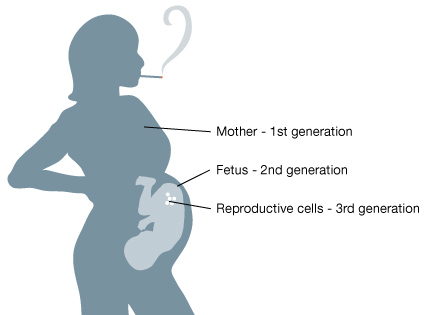
 | Research in human epigenetic inheritance itself is a challenge because humans have long life spans, expanding the time needed to track further than one generation extremely time consuming. Humans also have greater genetic diversity, creating a challenge in the ability to rule out genetic differences. The only reason we know epigenetic inheritance is taking place is because of Dr. Lars Olov's research and what we've come upon since the discovery of epigenetics ourselves. |
To Prove Epigenetic Inheritance In Humans, Researchers Have To Prove That:
|
 |
Most studies are done on lab animals and because animals and humans are very different creates a challenge when discoveries are made. Discoveries have that are found in the animals have to be proven that it can also work with humans, and twins are the only ones that will come with outcomes accurate to those of the mice. Read More About Twins And Their Role In The Field Of Epigenetics Here
